
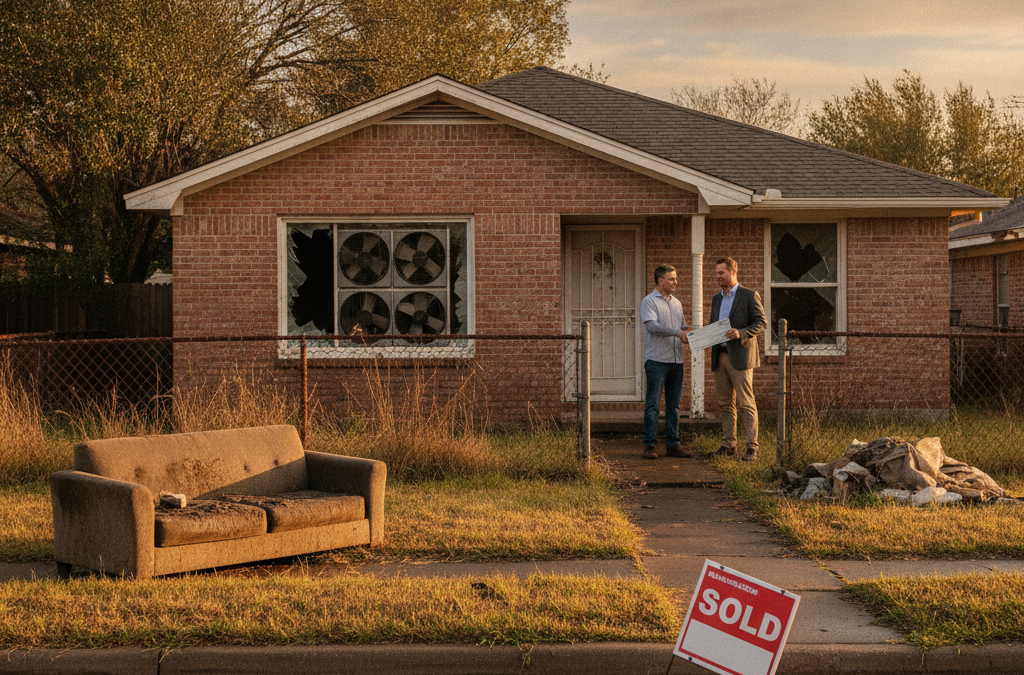
How to Sell a Flood-Damaged House in Houston Without Waiting on Insurance or FEMA
Yes — you can sell a flood-damaged house in Houston without waiting for an insurance settlement or FEMA assistance to come through, and without spending a dollar on repairs first. If your home took on water during a storm event, you already know how exhausting the aftermath can be: adjusters who are slow to respond, damage estimates that don’t cover real costs, and a property that’s sitting in limbo while the clock keeps ticking. For many Houston homeowners, the fastest and cleanest way out is a direct cash sale — sold as-is, on your timeline, with no contractor bids, no open houses, and no realtor fees cutting into what little equity you may have left.
Why Flood-Damaged Homes Are Uniquely Hard to Sell the Traditional Way in Houston
Houston sits in one of the most flood-prone metropolitan areas in the country. Harris County alone has experienced repeated 500-year flood events within the last decade — Harvey being the most devastating, but far from the only one. Neighborhoods in Humble, Baytown, Pearland, and along the bayou corridors throughout the city are particularly vulnerable, and many homeowners in these areas have dealt with flooding more than once.
When you try to sell a flood-damaged home on the traditional market, you run into a series of compounding problems:
- Disclosure requirements: Texas law requires you to disclose known flood damage and prior flooding history to buyers. That alone eliminates a large portion of the retail buyer pool, especially first-time buyers with conventional financing.
- Lender restrictions: Most banks won’t approve a mortgage on a home with unrepaired structural or water damage. That limits your buyer to cash buyers or investors regardless — so why not skip the middleman and sell directly?
- Inspection failures: Even if the visible damage looks minor, water intrusion behind walls, under flooring, or in the crawlspace almost always triggers inspection red flags, leading to renegotiation or deals falling apart entirely.
- Mold timelines: In Houston’s humid Gulf Coast climate, mold can establish within 24 to 48 hours of water intrusion. If remediation hasn’t happened, mold disclosure becomes another obstacle — and retail buyers walk.
Trying to list a flood-damaged property the traditional way almost always means price reductions, delays, and stress — especially in a market where buyers have plenty of move-in-ready options to choose from.
What Insurance and FEMA Actually Cover — And What They Don’t
This is a critical gap that most real estate investor websites don’t address honestly, so it’s worth walking through clearly.
Standard homeowners insurance does not cover flood damage unless you have a separate flood insurance policy through the National Flood Insurance Program (NFIP) or a private carrier. If you have flood coverage, your payout is subject to your policy limits, your deductible, and the adjuster’s damage assessment — which frequently comes in lower than actual repair costs.
FEMA individual assistance is available after a presidentially declared disaster, but the grants are capped (often at amounts that don’t come close to full repair costs), and the application and review process can drag on for months. FEMA assistance is also meant to supplement, not replace, private insurance — so if you have a flood policy, FEMA’s role becomes even more limited.
The practical reality for many Houston homeowners is that between deductibles, coverage limits, and depreciated value calculations, the insurance or FEMA payout covers maybe half of what it actually costs to restore the home to livable condition. And during that waiting period, you may still be making mortgage payments on a house you can’t live in.
If you’re in that position, selling to a cash buyer — before or after a partial insurance payout — may put more money in your pocket faster than waiting for the process to play out. Learn more about how fast cash sales work for Houston homeowners in distress.
Can You Sell Before the Insurance Claim Is Settled?
Yes, in most cases. There’s no legal requirement in Texas that you wait for an insurance claim to resolve before selling your home. However, there are a few things to understand:
- If you have an active claim open, the claim typically transfers to you — not to the buyer — upon closing. The proceeds from any settlement after closing would still come to you as the policyholder at the time of loss.
- If you have an existing mortgage, your lender may be listed as a co-payee on the insurance proceeds, which can complicate things. A direct cash sale that pays off the mortgage at closing can actually simplify the insurance settlement process.
- Selling as-is to a cash buyer means you don’t have to use insurance funds to make repairs before listing — you can sell in current condition and let the buyer take on the restoration work themselves.
Every situation is different, and it’s worth having a brief conversation with a local buyer to understand what your specific options look like. A legitimate cash buyer will walk you through the process clearly before you commit to anything.
How the Cash Sale Process Works for a Flood-Damaged Property
At Hero Homebuyers Houston, the process is straightforward and doesn’t require you to clean, repair, or stage anything. Here’s what to expect:
- Step 1 — Request a free offer: Share basic details about your property and its current condition. No obligation to accept anything.
- Step 2 — Schedule a walkthrough: We’ll visit the property to assess the damage firsthand. We buy homes with water damage, mold, structural issues, and flood history — none of that disqualifies your home.
- Step 3 — Close on your schedule: If you accept the offer, we can typically close in as little as seven days. If you need more time to sort out logistics, we work around your timeline. There are no realtor commissions, no closing costs passed to you, and no financing contingencies that can fall through.
You don’t need to hire a contractor, get a damage estimate, or wait for the adjuster’s final number. You sell the house in its current condition, take the cash, and move forward. See the full step-by-step process here.
What to Watch Out for When Selling a Flood-Damaged Home in Houston
Not everyone who calls themselves a cash buyer operates the same way. If you’re exploring this option, here are a few things to keep in mind:
- Avoid buyers who inflate their offer and then cut it at closing. A reputable local buyer gives you a realistic offer upfront based on actual condition — not a high number designed to tie up your property while they find an end buyer.
- Look for local experience with flood-damaged properties. Houston’s flood market is unique. A buyer familiar with Harris County disclosure requirements, bayou-adjacent properties, and Gulf Coast renovation costs will give you a more accurate offer than a national franchise that prices based on algorithms.
- Confirm there are no hidden fees. A legitimate cash offer should have zero realtor commissions, no processing fees, and no closing costs passed to the seller. Get that in writing.
- Make sure they can close on the timeline they quote. Ask whether they use their own funds or rely on outside financing. If they’re borrowing to close, delays are possible. A true cash buyer closes with their own capital.
Frequently Asked Questions About Selling Flood-Damaged Homes in Houston
Does it matter how many times my Houston home has flooded?
Not for a cash buyer. Repeat flooding is a real issue in parts of Harris County, Galveston County, and Brazoria County, and it severely limits your retail buyer pool — but a cash buyer who specializes in as-is purchases accounts for that history in their offer rather than walking away because of it.
Do I have to disclose flood damage even if I’m selling as-is?
Yes. Texas disclosure law requires sellers to disclose known flooding history and material defects regardless of how the property is being sold. A reputable cash buyer already expects this and prices accordingly — you won’t be penalized for being upfront about the home’s condition.
What if my home is in a FEMA-designated flood zone?
Being in a Special Flood Hazard Area (SFHA) affects future buyers who may need flood insurance — but it does not prevent a cash sale. We buy homes in designated flood zones throughout the Houston metro, including low-lying areas near Pearland, Humble, and Baytown.
Can I sell if I still owe money on the mortgage?
Yes. The mortgage gets paid off at closing from the sale proceeds, just like any standard transaction. If the sale price is less than what you owe, that’s a separate conversation worth having early — but many flood-damaged properties still carry enough equity to cover the balance and put cash in your pocket.
How fast can you actually close on a flood-damaged home?
In most cases, we can close within seven to fourteen days of an accepted offer. If you have a specific deadline — a mortgage payment coming due, a lease start date on a new place, or a family situation driving urgency — let us know and we’ll work to match it.
Ready to Stop Waiting and Start Moving Forward?
Flood damage is one of the most stressful situations a Houston homeowner can face — especially when the insurance process drags on, repair costs feel overwhelming, and you’re not sure what the house is even worth anymore. You don’t have to stay stuck in that uncertainty. A straightforward cash offer gives you a clear number, a firm closing date, and the ability to put this behind you without a contractor, a realtor, or months of waiting.
If your home in Houston, Baytown, Pearland, Humble, or anywhere else in the Greater Houston area has flood or storm damage and you want to understand your options, request a free, no-obligation cash offer from Hero Homebuyers Houston today. There’s no pressure, no cost, and no commitment required to get a number.