
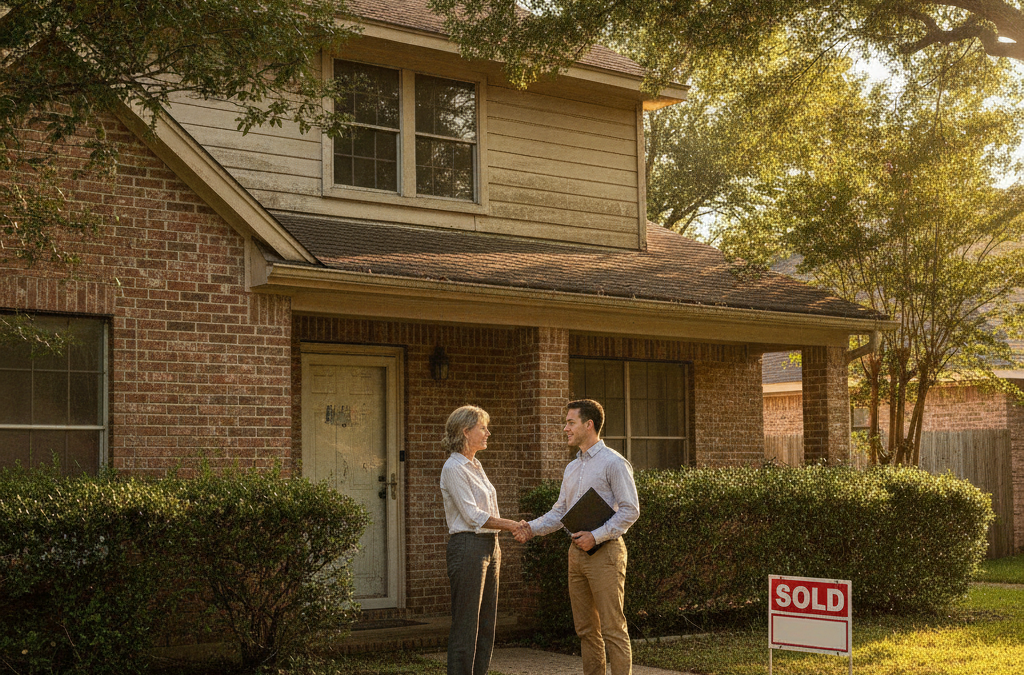
What Happens to a House in Probate in Houston — And How to Sell It Fast
When someone passes away in Houston and leaves behind a house, that property usually can’t be sold, transferred, or refinanced until it clears probate — the legal process Texas uses to validate a will, settle debts, and transfer ownership to heirs. If you’re an heir or estate executor trying to figure out what comes next, you’re not alone. Probate in Harris County can feel confusing, especially when you’re managing grief at the same time. The good news: Texas actually has one of the more streamlined probate systems in the country, and in many cases, you can move toward selling the property faster than you might expect.
What Probate Actually Means for a Houston Property
Probate is a court-supervised process that confirms the legal transfer of a deceased person’s assets to their heirs or beneficiaries. In Texas, probate cases are handled at the county level — in Houston that means the Harris County Probate Courts, which handle a high volume of cases given the region’s large and aging homeowner population.
If your loved one had a valid will, the executor named in that will files for probate, the court approves the will, and the executor is granted authority to manage and sell estate assets — including real estate. If there was no will, the court appoints an administrator and determines heirs under Texas intestacy laws. Either way, the house itself is frozen in place until the court issues the appropriate orders or letters testamentary granting authority to act on the estate’s behalf.
Texas also offers a process called muniment of title, which can be faster than full probate when there are no outstanding debts beyond a mortgage and a clear will exists. It’s worth asking a probate attorney whether your situation qualifies.
How Long Does Houston Probate Take — And What Does It Cost?
A straightforward Texas probate case typically takes three to six months from filing to close. More complicated estates — especially those involving disputes among heirs, missing paperwork, or property tied up in multiple counties — can stretch to a year or more. Harris County courts are experienced and generally efficient, but volume and documentation issues can create delays.
Expect costs to include court filing fees, attorney fees (often a percentage of the estate or a flat fee), and potentially appraisal or property management costs if the house sits vacant during the process. Maintaining a vacant property in Houston isn’t cheap — you still owe property taxes, utilities if the home is kept active, insurance, and basic upkeep to prevent deterioration, especially given Houston’s heat and humidity.
If the property has flood or storm damage — which is common in older homes across Harris County, Pasadena, Baytown, and other parts of the Gulf Coast region — deferred maintenance can compound quickly during a prolonged probate timeline.
Can You Sell a House While It’s Still in Probate in Texas?
Yes — and this is a critical point that many heirs don’t realize. In Texas, once the executor or administrator has been granted authority by the court (via letters testamentary or letters of administration), they can list and sell estate property without waiting for probate to fully close. The sale proceeds simply become part of the estate and are distributed according to the will or court order.
This means that if you’re the executor of a Houston estate and you’ve received your court authorization, you don’t have to wait months more before putting the house on the market or accepting a cash offer. The key is making sure the sale is properly documented and that your probate attorney reviews any purchase agreement before you sign.
Working with a cash buyer experienced in inherited and probate property sales makes this step significantly smoother. They understand the paperwork, they don’t require you to make repairs or stage the home, and they can work within the timeline your attorney and the court require.
Why Listing a Probate Property the Traditional Way Often Backfires
It’s tempting to assume that listing with a real estate agent will get you the highest price — and sometimes it does. But probate properties come with complications that traditional buyers and their lenders often can’t handle well.
- Lender financing requirements: Conventional buyers using mortgage loans often can’t close on a property with title complications, deferred repairs, or roof/foundation issues that are common in older estate homes. If the buyer’s financing falls through, you’re back to square one.
- Condition issues: Many inherited homes in Houston — particularly in neighborhoods like Humble, Katy, and Sugar Land where longtime residents have owned their homes for decades — haven’t been updated in years. A traditional listing may require costly repairs before a lender will approve financing for the buyer.
- Carrying costs: Every month the home sits on the market, the estate is paying taxes, insurance, and utilities. A sale that takes four months to close after a 60-day listing period costs real money.
- Out-of-town heirs: Many Houston estate executors live outside Texas. Managing showings, coordinating repairs, and attending closings from out of state adds stress and expense that a direct cash sale eliminates entirely.
What Cash Buyers Look for in a Probate Property — And What They Don’t Require
A legitimate cash home buyer in Houston doesn’t require you to clean out the house, make repairs, or bring the property up to any particular standard. They’ll buy it as-is — furniture, old appliances, deferred maintenance, storm damage, and all. This matters enormously for probate situations where the executor may not have the budget or the bandwidth to prepare the home for retail sale.
What a reputable cash buyer does need from you is clear: documentation that you have legal authority to sell the property. That means your letters testamentary or letters of administration from the Harris County Probate Court, plus standard title paperwork. A good buyer will work directly with your probate attorney and a title company to make sure everything is done correctly.
At Hero Homebuyers Houston, the process is straightforward: you request a free cash offer, we schedule a walkthrough at a time that works for you (even if you’re not local), and you choose the closing date. There are no commissions, no fees, and no repairs required. If the property is still technically in probate, we work with your attorney’s timeline.
A Note on Multiple Heirs — And Why Speed Matters
One of the most common complications in Houston estate sales is disagreement among multiple heirs about what to do with the property. One sibling wants to sell. Another wants to rent it. A third lives out of state and just wants their share of the proceeds. These situations can drag on for months — and during that time, the house sits, deteriorates, and costs everyone money.
A cash offer creates a concrete, specific number that heirs can evaluate together. It removes the uncertainty of “what could we get if we fixed it up and listed it” and replaces it with a firm, no-obligation offer that all parties can consider. In our experience working with Houston families, having a real number on the table often breaks the deadlock faster than any other approach.
Frequently Asked Questions: Selling a Probate House in Houston
Do I need to wait until probate closes to sell the house in Texas?
Not necessarily. Once the executor or administrator has been granted authority by the Harris County Probate Court — typically through letters testamentary — you can accept an offer and move toward closing while probate is still ongoing. Your probate attorney will guide you through the specifics for your estate.
What if the house has been sitting vacant and has damage?
A cash buyer will purchase the home as-is, including flood damage, deferred maintenance, roof issues, or any other condition problems. You don’t need to repair anything before accepting an offer. This is especially relevant in Houston, where homes can develop significant moisture and structural issues quickly when left unoccupied.
Can I sell a probate property if there are multiple heirs who need to agree?
Yes, but all heirs (or the court-appointed administrator) typically need to sign off on the sale. Getting a firm cash offer on the table often helps align heirs who are on the fence, because it replaces speculation with a concrete number.
What happens to the mortgage on an inherited Houston home during probate?
The mortgage doesn’t go away when the original owner passes. The estate is responsible for keeping up with payments during probate to avoid foreclosure. If payments are at risk of falling behind, selling quickly — including through a cash sale — can protect the estate’s equity and the heirs’ share of proceeds.
Do I need a real estate attorney to sell a probate property in Texas?
You should have a probate attorney involved in any estate with real property. They ensure the sale is properly authorized and that proceeds are distributed correctly. A cash buyer who is experienced with probate sales will coordinate directly with your attorney to keep things on track.
Ready to Talk About the Inherited Property?
If you’re navigating a probate situation in Houston, Harris County, Fort Bend County, or Montgomery County — whether the estate is straightforward or complicated — Hero Homebuyers Houston is here to help you understand your options without any pressure. We work with executors, estate attorneys, and out-of-town heirs regularly, and we know how to make the process as simple as possible for everyone involved.
There’s no cost to request an offer, no obligation to accept it, and no repairs or cleanup required on your end. Reach out to our team today and let’s talk through what the property is worth and how quickly we can close on your schedule.