
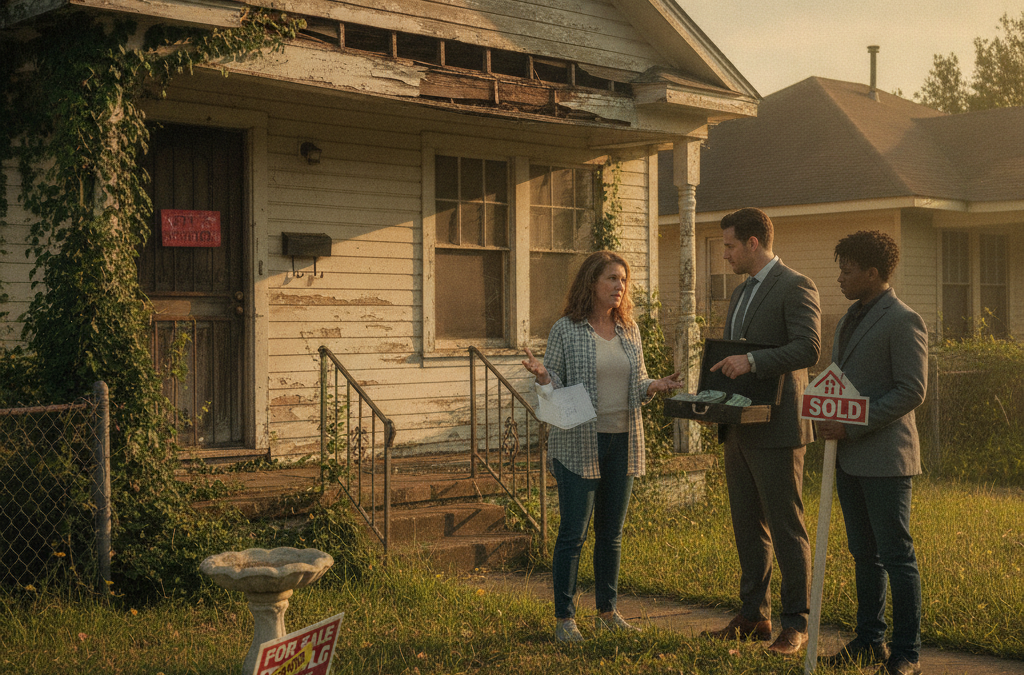
What Happens If You Can’t Sell Your Houston House Because It Has Code Violations?
Yes — you can sell a house in Houston that has open code violations. It feels like a wall, but it isn’t one. Code violations scare off traditional buyers and their lenders, but they don’t prevent a sale. If your property has racked up violations from the City of Houston, Harris County, or a municipality like Pasadena or Baytown, a cash buyer who purchases homes as-is is often the cleanest, fastest path out — no repairs required, no fines you have to settle before closing.
Here’s what you actually need to know.
What Are Municipal Code Violations in Houston — and How Do They Happen?
Houston is famously the largest U.S. city without traditional zoning, but that doesn’t mean anything goes. The City of Houston enforces a detailed set of municipal codes covering structural safety, electrical systems, plumbing, exterior maintenance, overgrown lots, inoperable vehicles, unpermitted construction, and more. Harris County municipalities like Pasadena and Humble each have their own enforcement arms as well.
Violations happen for all kinds of reasons that aren’t always the owner’s fault:
- A roof or foundation damaged by Hurricane Harvey or subsequent storms that was never fully repaired
- An older home in Baytown or Humble that was inherited and sat vacant while an estate sorted itself out
- Unpermitted additions — a garage conversion or extra room added by a previous owner years ago
- Deferred maintenance that escalated after a job loss, illness, or life event
- Tenant damage on a rental property that went unaddressed
Whatever the source, once a code complaint is filed or a city inspector tags the property, the clock starts. Fines accumulate. In some cases, the city can place a lien on the property.
Why Code Violations Kill Traditional Listings — But Not Cash Sales
This is the gap most homeowner-focused content online completely ignores — and it’s worth understanding clearly before you make any decisions.
When a buyer uses a mortgage, their lender requires a clear appraisal and often a passing inspection. Open code violations almost always trigger a “subject to repair” condition from the lender. That means the violations have to be cured before the lender will fund the loan. The seller is stuck: spend thousands resolving the violations first, or watch deal after deal fall apart in escrow.
Listing agents in the Greater Houston area are aware of this problem, but their toolbox is limited. They’ll either ask you to fix the issues before listing, price the home aggressively to attract investors who might pay cash anyway, or accept that the buyer pool will be thin and negotiations will be painful.
A direct cash buyer operates completely outside that lending framework. There’s no bank involved, no underwriter reviewing the inspection report, no appraiser flagging unpermitted square footage. The buyer assesses the property’s real-world value — violations included — and makes an offer accordingly. You skip the repair process entirely.
At Hero Homebuyers Houston, the process works in three steps: you request an offer, we schedule a walkthrough, and you choose your closing date. No repairs, no cleaning, no open houses. The offer is free and comes with zero obligation.
Do You Have to Disclose Code Violations When Selling in Texas?
Yes — and this is a detail that trips up a lot of Houston homeowners.
Under Texas law, sellers are required to disclose known material defects and conditions that affect the value or desirability of the property. Open code violations generally fall into that category. Attempting to conceal them creates legal exposure that can outlast the sale itself.
The good news: disclosing violations to a cash buyer who purchases as-is is not a deal-killer. A reputable local buyer already expects properties to have issues — that’s the entire premise of the service. What you want to avoid is surprises that come out mid-close, which can cause delays or renegotiations. Being upfront from the start keeps the process clean and fast.
What About the Fines and Liens Already Attached to the Property?
This is where things can get complicated, and it’s another topic that most competitor content in the Houston market glosses over without useful detail.
If the city has issued fines and those fines have been converted to a lien against the property, that lien typically must be satisfied at or before closing — it attaches to the title and can’t simply be transferred to a new owner in most circumstances. The same applies to tax liens, though that’s a separate topic.
However, there are a few things working in your favor:
- Liens can sometimes be negotiated down. Houston code enforcement and municipal courts have processes for fine reduction, especially when the property is being sold and violations will be remediated by the new owner.
- A local cash buyer can factor lien payoff into the transaction structure. Rather than leaving you to sort this out alone, an experienced buyer will account for known liens during the offer process and coordinate title resolution at closing.
- Title companies handle lien payoff from closing proceeds. You don’t typically need to come to the table with cash to clear a lien — it comes out of the sale at closing.
The important thing is to know what’s out there before you get too far into any sale process. A title search will surface it. If you’re unsure what liens or violations are recorded against your property, asking a local Houston-area title company for a preliminary search early on is a smart move.
Situations Where This Comes Up Most in Houston and Harris County
Across the Greater Houston area, code violation situations tend to cluster around a handful of circumstances that are very local in nature:
- Post-flood or storm damage — Houston’s Gulf Coast exposure means a meaningful number of homes carry unresolved structural or systems damage from past hurricanes and flooding events. Properties in areas prone to repeat flooding sometimes have violations layered from multiple storm cycles.
- Inherited properties in Galveston County and older Harris County neighborhoods — When a family member passes and heirs are out of state or overwhelmed, properties can fall into disrepair and attract code complaints before the estate is even settled. Selling an inherited property in this condition is something we help families navigate regularly.
- Landlord exits in Pasadena and Humble — Rental properties that suffered tenant damage often sit with deferred repairs long enough that code complaints get filed. Landlords trying to exit the rental market don’t want to invest another $20,000 into a property they’re trying to get out of.
- Older homes along the I-10 and 610 corridors — Aging housing stock in inner-loop neighborhoods sometimes carries unpermitted work done decades ago that only surfaces when the property changes hands.
What to Watch Out For When Choosing a Cash Buyer for a Code-Violation Property
Not every cash buyer handles these transactions the same way. A few things to look for:
- Make sure the buyer has direct experience with code-violation and lien-encumbered properties — ask directly how they’ve handled them before
- Confirm they use a licensed Texas title company and that lien resolution is part of their standard closing process
- Avoid any buyer who asks you to resolve violations before they’ll finalize an offer — the whole point of selling as-is is that you don’t
- Look for a locally-based operation with knowledge of Houston municipal code processes, not a national franchise that doesn’t know the difference between City of Houston enforcement and a Harris County municipality
If you want to understand what our offer process looks like before you commit to anything, you can request a free, no-obligation cash offer here — there’s no pressure and no cost to find out where you stand.
Frequently Asked Questions
Can I sell my Houston house with open code violations without fixing anything first?
Yes. When you sell to a cash buyer who purchases as-is, you are not required to make any repairs or resolve violations before closing. The buyer accounts for the property’s condition in their offer.
Will code violation fines stop my sale from closing?
Fines that have been converted to liens on the title will need to be addressed at closing — typically paid from proceeds. They don’t automatically block a sale, but they do need to be accounted for. A good title company will surface them during the search process.
Does the City of Houston notify potential buyers about open violations?
Violation records are public, and a diligent buyer or title company can find them. As a seller, your safest approach is proactive disclosure. Trying to hide known violations creates legal risk that survives closing.
What if my house has both code violations and unpermitted additions?
Cash buyers who buy as-is are accustomed to both. Unpermitted square footage affects how the property can be valued but doesn’t prevent a private cash sale. The buyer will factor it in rather than requiring you to pull retroactive permits.
How fast can I close if my house has code violations?
Closing timelines depend on how quickly a title search can clear and whether there are liens to settle, but many transactions close in two to three weeks. If the title is relatively clean and violations are unrecorded, closing in as little as seven to ten days is realistic.
Ready to Talk About Your Situation?
Code violations don’t have to mean you’re stuck. Whether your property is in Houston proper, out in Pasadena, or anywhere across Harris County, Hero Homebuyers Houston is a locally-operated team that knows how to work through the details of a problem property and get you to closing without the runaround.
There’s no cost to find out what your house is worth in its current condition. Contact us today and we’ll walk you through your options — no pressure, no obligation, and no repairs required on your end.